
PILLARS OF LOGIC
A student in a live video class with classmates on screen

LIVE ONLINE CLASS · AGES 11 TO 13

Teach your kid how to think, and how to argue well.

A live logic class on video for ages 11 to 13. Each week, six students and a teacher crack a real case or debate a real question, and every child takes a position and backs it up with evidence.

Save my child's free seat

Free 55-minute class · No commitment · Six seats per class

FOUNDING FAMILIES · FREE

Join a free founding class

Your child takes a real lesson, live on video, with other kids their age. You see exactly how it works before the full course opens.

Your child's age
Times that work (weekdays, Pacific)

I'll email you a date once a group of six fills. No payment, no obligation. A parent consent form comes before class. Privacy

YOU'RE ON THE LIST

Your child's seat is saved

Thank you. Once a group of six fills, I'll email you at your address to confirm the day and time.

If you don't see it, check your spam folder for a message from me.

Michelle Ashkelon

Made for the kid who…

  • argues with everything, and could argue better
  • asks "why" until you run out of answers
  • believes whatever sounds sure of itself
  • is quiet, but thinks a lot

Secular and nonpartisan. It teaches how to think, not what to think.

What happens in class

55 minutes, live on video, with five classmates and a teacher. Kids talk first; the teacher talks last.

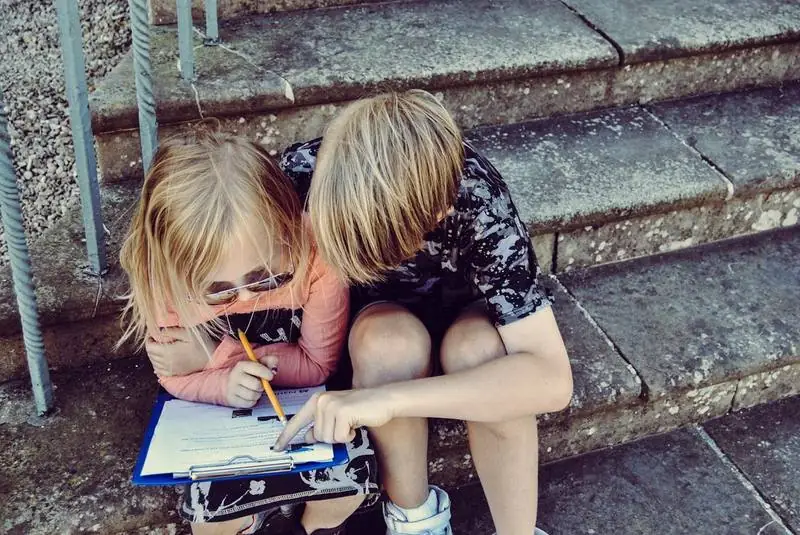
Two children leaning over a clipboard, working through a problem together
  1. Open the envelope together. Everyone breaks the seal on this week's printed lesson at the same moment, reads it, and votes.
  2. Argue with a partner. Partners trade last week's written paragraphs, then argue the text one-on-one for twenty minutes. A new partner every week.
  3. Argue as a class. Pairs bring their best questions, the class argues the strongest one, and everyone votes again: who changed their mind, and why?
  4. The reveal. What really happened, then the pattern gets its name: a trick, or fair? In a debate, each side names the other's best point, and no winner is declared.

After class, each child writes a short argument at home and reads it to next week's partner.

THE FULL COURSE

  • 36 live weekly classes through the school year
  • A printed pack mailed home: a sealed lesson for every week, 15 pattern cards and a family guide
  • A written argument every week with partner feedback, plus teacher feedback on six unit pieces
  • Regular and challenge writing tracks, so every child is stretched
TRY A LESSON2 MINUTES

Where should the armor go?

In World War II, officers counted bullet holes on the bombers that came back. The body and wings were riddled with them; the engines had the fewest. Their plan: armor the places getting hit.

Where would you put the armor?

Before the reveal comes the argument. A partner would push you on:

Which planes did they actually count?

If a plane was hit in the engine, where would it be now?

Changed your mind? Switch your vote first.

THE REVEAL · Mathematician Abraham Wald saw the flaw: they only counted planes that survived. Planes hit in the engines mostly never came back. His advice: armor the places where the returning planes had the fewest holes.

THE PATTERN · Only the Survivors: judging by what made it through, and forgetting what didn't.

In class, kids argue a case like this for 35 minutes before the teacher reveals what happened.

Michelle Ashkelon teaching a class

Taught by Michelle Ashkelon

Developmental linguist who designed the course

"Every argument is made of words. That's why a linguist teaches logic."

Loaded words, slanted framing, sentences that imply more than they say: most bad arguments hide in the language. I first taught children at 18, later taught college-credit Modern Hebrew to high schoolers through the University of Minnesota, and learned in havruta myself, the centuries-old method of learning in pairs this class is built on.

Small habits every week. A sharper mind for life.

Tests claims instead of repeating them

→ Not easily fooled by an ad, a headline or a chatbot

Argues a real disagreement with a partner

→ Disagrees without damaging the relationship

Speaks up and writes, with reasons, every week

→ Makes a case others take seriously

Built on the grades 6 to 8 argument and discussion standards.

Questions parents ask

Is it really live?

Yes. Real time on video with the teacher, nothing recorded.

Is it religious?

No. It's secular and nonpartisan. Havruta is the teaching method; the texts are hoaxes, ads, experiments and history.

My child is shy. Will this work?

Yes. Every child talks to one partner before the group, and can always say "Come back to me."

How is it kept safe?

No child accounts, a waiting room for invited children only, private chat off, cameras on, and a family conduct agreement.

Is it a debate club?

No. About a third of lessons are debate questions, but nobody wins: each side states the other's best point, and a changed mind is what gets celebrated. The rest are real cases with a real answer to find.

Who is it not for?

Families who want self-paced recordings, formal logic like truth tables (that's a later level), or a class that takes sides on politics or religion.

A mind of their own, and the humility to change it.

Save my child's free seat

Six seats per class. Founding families only.